
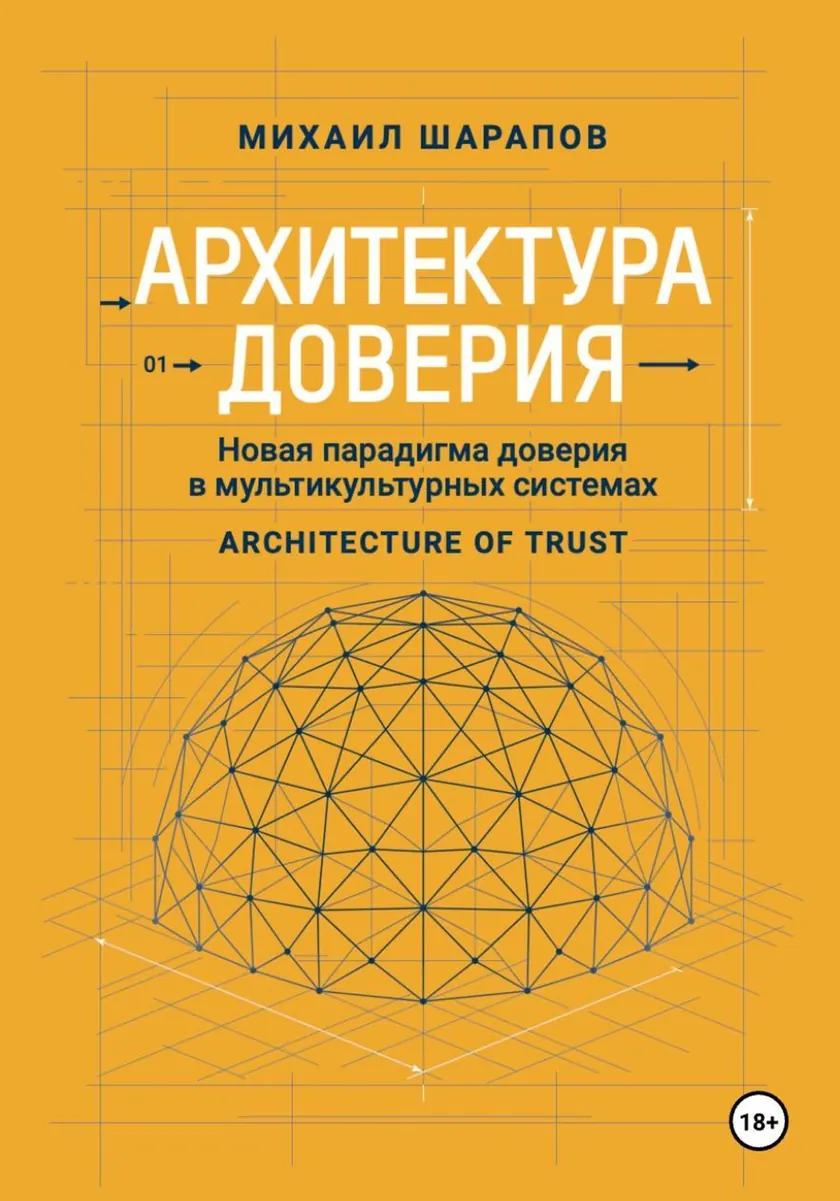
Architectureof Trust
A new paradigm for business efficiency in multicultural systems — an engineering approach to measuring and building trust across cultures, languages and markets.
“In this new borderless world, trust is a unique asset.”
A new global audience is emerging — people living in transit between countries, languages and cultures. Classic business approaches create friction, misunderstandings and hidden costs with this audience.
Architecture of Trust is an engineering methodology for building business efficiency in multicultural systems. Based on a decade of real-world experience opening international markets, Mikhail Sharapov formalizes the invisible dynamics of cross-cultural business into measurable, actionable tools.
This isn’t philosophy. It’s an engineering approach to the most valuable asset in the new borderless economy: trust.
What the method teaches
Four skills for working where cultures meet
Master the audience’s language
Translate not just words, but true meanings and intentions.
See the invisible
Read cultural codes and what is said between the lines in business communication.
Build lasting trust
Through practical, provable methods — not good intentions.
Find the “diamonds”
Identify master communicators: the people who can connect worlds.
Operational metrics
Measuring what used to be unmeasurable
Understandability Coefficient
How effective the first contact with a customer is: the share of users who complete a step without friction or signs of confusion.
Clarity Index
The quality of a text, based on sentence length, word simplicity and active voice. Predicts how well an audience will understand it — and how many support complaints it will cause.
Smoothness Index
The quality of live negotiations through interpreters: communication latency, accuracy of terms and preparedness.
Bridge Effect
An ROI metric showing that “bridge people” — those who connect cultures — are strategic assets, not expenses.
Market entry map
A strategic tool for entering a new market that assesses friction across language, access to bridges, regulation, the cultural scene and tempo.
Editions
For business leaders entering new global markets
Kindle edition
1st edition, April 2026. 90 pages. The Trust Architect Publishing.
Buy on AmazonPaperback
Архитектура доверия. Новая парадигма доверия в мультикультурных системах. ISBN 978-5-6054367-0-6.
Order on OzonWhen trust becomes the bottleneck
Architecture of Trust is more than a book. I work with leaders and teams when people speak different languages — literally or otherwise — and it starts to cost money.
What organisations come with
Entering a new market
The product works at home, but the new audience doesn’t understand it — or doesn’t believe it.
A team across countries and cultures
Tasks are set but understood differently. Decisions stall; hidden friction builds up.
Partners and offices in different countries
You agreed — yet each side is sure the other isn’t keeping its word.
After a merger or a change of leadership
People don’t understand the new rules and expect a catch.
How the work goes
Introduction
A short conversation: what is happening, who is involved, what you want to achieve.
Diagnostic by the method
We look at your communication through the metrics of the book: where meaning gets lost, where you need a “bridge person”, what blocks your model from transferring to a new market (RAP Map).
Sessions with leaders and teams
We work with what we found. Online or on site.
Where to start
Describe your situation and your company in two or three sentences — I’ll reply personally.
For interviews, media comments and talks — the same email.

About the author
Mikhail Sharapov is an author and strategic consultant specializing in international markets and cross-cultural business. He spent over a decade in international strategy — building markets from zero, working across cultures and languages — before he started writing.
More about Mikhail →